Projects
Explore the ambitious research programme that allows us to address key issues in sustainability.
The list below covers some of our current major projects; it is not an exhaustive list, and does not represent the full range of expertise and activity at the Institute. For further information on other activities, see the details of our research themes, and our individual academic profiles.
-

CHaMP: Circularity in Healthcare Materials
CHaMP is a three-year collaboration between The University of Manchester and Bupa, supported by an EPSRC Prosperity Partnership, exploring how healthcare materials can become more sustainable through reuse, recycling and improved material selection. Bringing together expertise in materials science, engineering and social sciences, the project investigates circular pathways across Bupa’s healthcare settings, aiming to reduce environmental impacts while maintaining clinical outcomes.
Read more
-
Empowering Households in Resource-Efficient Sustainability Transitions
Professor Alison Browne is contributing to an Australian Research Council Discovery Project exploring how households can drive sustainability transitions across energy, water, food and waste systems. Led by Professor Jo Lindsay, the project brings together researchers from RMIT University, Monash University and the University of Manchester to identify practical solutions and new pathways for resource-efficient change.
Read more
-
Governing Critical Minerals: International Investment Law and the Politics of Mining in the Green Transition
Dr Clare Cummings is exploring how international investment law shapes the governance of critical minerals needed for the energy transition. Focusing on mining law reforms in Tanzania and Mexico, the research examines why governments seek greater control over their mineral resources, how investor–state disputes influence mining regulation, and how international investment agreements affect the distribution of mining’s benefits and impacts. The project aims to identify the political and legal conditions that can enable mineral-rich countries to generate greater economic benefits from critical minerals while maintaining social and environmental protections.
Read more
-
Green energy transitions and global disruption: The (un)just transition to Net Zero
This project researches green energy transitions and global disruption in the transition to Net Zero.
Read more
-
IMAGINE: Contested Futures of Sustainability
This 3-year project, funded by the Norwegian Research Council, sets out to study images of the future as imaginaries in a sustainable future.
Read more
-
Joined Up Sustainability Transformations (JUST)
JUST is a major research initiative focused on the pursuit of sustainability transformations that are people-centred, ‘joined-up’ and socially just. It seeks to accelerate understanding of a just transition through coordinating research into action at all levels of society.
Read more
-
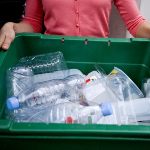
One bin to rule them all
Improving compliance with recycling by developing ‘One bin’ to hold all plastic-like items as well as improving recycling infrastructure.
Read more
-
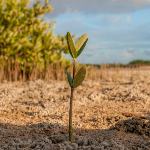
REVIVE, Just Restoration and Equitable Value Chains for Inclusive, Viable Mangrove Ecosystems
Dr Aarti Krishnan is leading REVIVE, a three-year international research project led by the University of Manchester and supported by Universiti Kebangsaan Malaysia, Universiti Malaysia Terengganu, The University of Warwick, Cardiff University, National University of Singapore and the Penang Inshore Fishermen Welfare Association. The project explores how mangrove restoration in Malaysia can protect ecosystems while creating fairer opportunities for coastal communities, examining community governance, environmental evidence and equitable value chains.
Read more
-
The political economies of plastic packaging recycling
Addressing persistent challenges concerning recyclability in and beyond Greater Manchester.
Read more
-
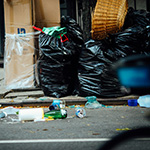
The Waste Tip: Exploring fly-tipping and opportunities for better waste management (Fly-tipping)
‘The Waste Tip’ aims to explore the phenomena of fly-tipping through an interdisciplinary lens.
Read more
-
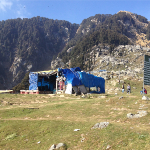
The World’s Highest Rubbish Dump: a Himalayan Anthropocene
Funded by The Leverhulme Trust, Dr Julia Perczel is exploring the chemical, social and political geographies of waste in the Indian foothills of the Himalayas. Her ethnographic research examines how plastic and other materials accumulate across landscapes and interact with environmental, social and economic processes. The project considers challenges in waste management, including limitations in infrastructure, logistics and recycling systems, while exploring how waste becomes entangled with climate change, geological processes and the sacred landscapes of the Himalayas. The research contributes to scholarship on the Himalayan Anthropocene and examines emerging responses to the region’s environmental crisis.
Read more
-
Towards Inclusive Environmental Sustainability (TIES)
Exploring how the knowledge and practices of immigrants from the Global South contribute to building just and sustainable cities in the Global North.
Read more
-
The Political Economy of Climateflation: tracking the everyday costs of climate change
The Political Economy of Climateflation Research Project examines how the causes and consequences of climate change, alongside efforts to mitigate and adapt to it, are influencing the everyday costs of life. Led by Dr James Jackson (University of Manchester) and Dr Ryan Katz-Rosene (University of Ottawa), the project critically assesses the concept of “climateflation” and its implications for economies and societies.
The research explores how climate change is reshaping costs across key areas including food, energy, transport and housing, with a particular focus on the experiences of people in the Global North. It considers how these changing costs may affect inequality, governance and social stability, providing a more contextual understanding of the political and social consequences of climate change beyond conventional economic measures.
Read more



.jpg)